
Office Cleaning and Productivity: Why a Clean Workspace Matters More Than You Think
It is easy to think of office cleaning as a purely cosmetic concern — something that matters for appearances when clients visit, but is otherwise a background cost to be minimised. The evidence, and the day-to-day experience of anyone who has worked in both a cluttered, poorly maintained office and a genuinely clean, well-organised one, suggests otherwise. A clean workspace measurably affects staff wellbeing, sickness absence, concentration and even how clients and visitors judge your business before a single word is spoken. For businesses across Southend-on-Sea and Essex weighing up whether professional office cleaning is worth the cost, this guide sets out exactly why it usually is.
The First Impression Problem
Clients and visitors form an impression of a business within seconds of walking through the door, often before any conversation has taken place. A dusty reception desk, streaked glass entrance doors, an overflowing bin, or a grubby carpet sends a signal about standards and attention to detail that no amount of polished sales talk can fully undo. This matters just as much for a small serviced office in Southend town centre as it does for a larger commercial premises — the scale of the business does not change how much a first impression matters to whoever is forming it.
The reverse is equally true: a genuinely clean, well-maintained office signals competence and care before anyone has reviewed a single proposal or price list. In competitive industries where clients are choosing between several similar businesses, this kind of unspoken signal can quietly influence decisions in ways that are hard to measure directly but easy to feel the absence of.
The Link Between Cleanliness and Staff Wellbeing
Workplace cleanliness has a well-documented relationship with staff wellbeing and morale. Employees who work in a visibly clean, well-maintained environment consistently report higher job satisfaction than those in neglected spaces, and this is not simply about aesthetics — a poorly maintained workspace can genuinely feel like a signal that the business does not particularly value the people working in it, which affects morale in a way disconnected from the cleaning itself.
There is also a more direct, physical dimension. Dust, allergens and poor air quality in an office environment are linked to headaches, fatigue and difficulty concentrating over the course of a working day — sometimes referred to as symptoms of "sick building syndrome" when they occur consistently across a workforce in a specific building. Regular professional cleaning, including proper attention to carpets, upholstery and air vents where dust accumulates, meaningfully reduces these irritants.
Sickness Absence and Shared Spaces
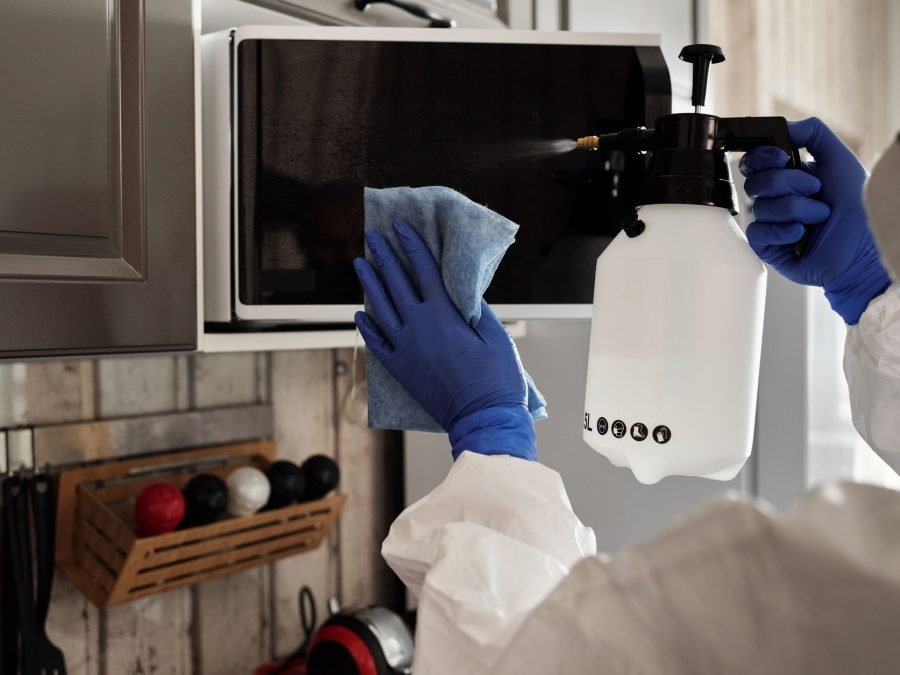
Offices are shared environments where illness spreads efficiently across desks, shared equipment, kitchen areas and meeting rooms. Touch points such as door handles, light switches, keyboards, shared phones and kitchen surfaces are consistently identified as high-transfer points for germs in shared workplaces, and regular sanitising of these areas — not just general tidying — measurably reduces the spread of common illnesses like colds and flu through a workforce.
The business cost of this is easy to overlook until it is calculated directly: sickness absence carries real costs in lost productivity, cover arrangements and, in some cases, statutory sick pay. A cleaning contract that specifically includes regular touch-point sanitising, not just visible surface cleaning, is a genuinely cost-effective way to reduce this, particularly during autumn and winter when seasonal illnesses circulate fastest through shared offices.
Concentration and Clutter
Research into workplace psychology consistently finds that visual clutter and disorganisation increase cognitive load — meaning the brain has to work harder to filter out visual "noise" even when a person is not consciously focused on it, leaving less mental capacity available for the actual task at hand. A desk area that is clean and organised, in an office that is well maintained more broadly, reduces this background cognitive drag in a way employees often cannot fully articulate but consistently feel as a difference in focus and energy across the working day.
This effect compounds across a full working week. An office that is cleaned thoroughly and regularly, rather than only superficially tidied, tends to see fewer of the small frictions — a sticky meeting room table, a grimy kitchen, an overflowing recycling bin — that quietly interrupt focus and add up to a noticeably less pleasant working environment over time.
What a Genuinely Thorough Office Clean Covers
- Desks, meeting rooms and communal areas — dusted and sanitised, not just visually tidied
- Kitchens and staff rooms — cleaned and restocked, including inside microwaves and fridges, which are easy to overlook
- Washrooms — cleaned to a genuinely hygienic standard and kept stocked with consumables
- Floors — vacuumed, mopped and periodically buffed, since carpets and hard flooring both show wear differently under constant foot traffic
- Touch-point sanitising — door handles, light switches, shared phones and keyboards
- Reception and entrance areas — glazing, floors and furniture kept to a client-facing standard at all times, not just before scheduled visits
How Often Should an Office Be Professionally Cleaned?
This depends heavily on footfall, but as a general guide: a small office with under ten staff often manages well with a thorough clean two to three times a week, supplemented by daily touch-point sanitising during flu season. A busier office, retail space or a business with regular client visits typically benefits from a daily clean, particularly for washrooms, kitchens and reception areas, which show wear and mess far faster under higher footfall. Businesses that are open to the public — shops, clinics, studios — usually need cleaning scheduled around opening hours, either before opening or after closing, so it does not disrupt trading.
Building Cleaning Around Your Business, Not the Other Way Around
One of the most common frustrations businesses have with cleaning contractors is inflexibility — a fixed schedule that does not accommodate early meetings, out-of-hours events, or seasonal changes in footfall. A good commercial cleaning provider should be able to work around your actual trading pattern: before you open, after you close, or during quieter periods during the day, with the flexibility to adjust as your needs change without renegotiating an entire contract each time.
Calculating the Real Return on Professional Cleaning
Business owners weighing up whether to invest in a professional cleaning contract, versus relying on staff to informally tidy up or an occasional ad-hoc clean, often frame it purely as a cost to minimise. It is worth reframing it instead as a return on investment. If a team of ten office staff loses even fifteen minutes a day collectively to the kind of low-level friction and distraction a poorly maintained office creates — a search for a clean mug, a distraction from visible clutter, a slower start after a disrupted night's sleep due to a lingering cold picked up in a shared kitchen — that adds up to over sixty hours of lost productive time a year, well beyond the cost of a proper cleaning contract in most cases. Reduced sickness absence alone, even a modest reduction achieved through proper touch-point sanitising, frequently covers a meaningful share of a cleaning contract's cost on its own.
There is also a retention and recruitment angle that is easy to overlook. Prospective employees, particularly at interview stage, form impressions of a workplace from the state of the office just as clients do, and a well-maintained environment is a small but real factor in how a business is perceived as an employer.
Frequently Asked Questions
Should cleaning happen during office hours or outside them?
Most businesses prefer cleaning outside working hours — before opening or after closing — to avoid disruption, though this is not essential for every task. Touch-point sanitising during flu season, for example, is often more effective when done partway through the working day, since that is when surfaces have had the most opportunity to accumulate germs.
Do small offices really need a professional cleaning contract?
Even small offices benefit, particularly because relying on staff to informally clean around their own work tends to be inconsistent and takes time away from their actual role. A professional contract, even at a reduced frequency for a smaller space, ensures a consistent standard without diverting staff time or attention.
What is the difference between commercial and domestic cleaning products?
Commercial cleaning typically uses professional-grade products designed for higher-traffic environments and, in many cases, faster-acting formulas suited to being used efficiently across a larger space in a limited time window, compared with products designed primarily for domestic use.
Can a cleaning contract be adjusted if our needs change?
With a good provider, yes — a genuinely flexible contract should be able to scale up during busier periods, adjust around office moves or expansions, and add or remove specific services like carpet cleaning as needed, rather than locking a business into a fixed arrangement regardless of changing circumstances.
Southend Sure Cleaning for Businesses
Our office and commercial cleaning service is built around exactly this flexibility — daily, weekly or fortnightly contracts, scheduled before you open, after you close, or whenever suits your team, with full insurance and a dedicated point of contact throughout. We work with offices, shops, clinics and studios across Southend-on-Sea and the wider Essex area, scaling from a single small office to multi-floor premises.
Request a free site visit and commercial cleaning quote today, and see the difference a genuinely clean workspace makes to your team and your clients.